
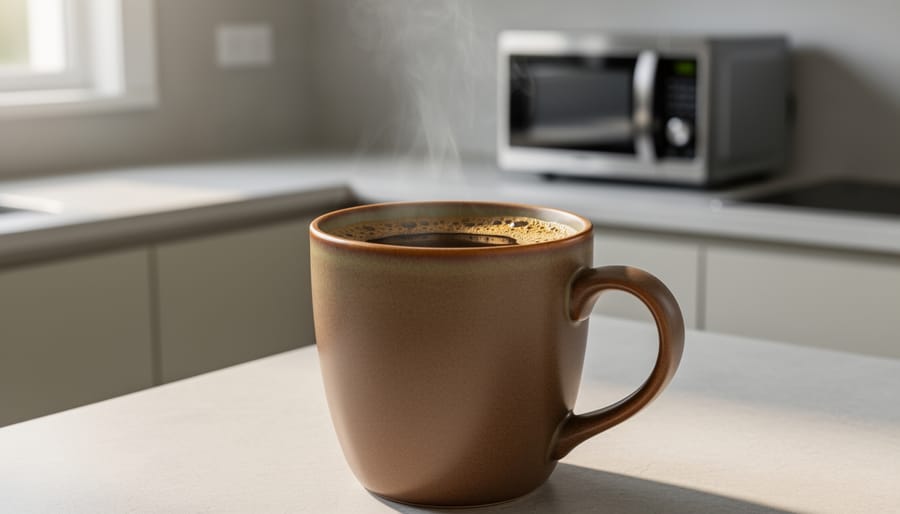
Yes, you can microwave coffee, and it takes about a minute. Pour it into a microwave-safe mug, heat it in 30-second bursts, stir between rounds, and stop as soon as it’s hot, not boiling. That’s the whole method, and it works for a forgotten morning cup or last night’s leftover pot.
The catch is flavor and safety. Coffee that’s blasted for too long turns bitter and flat, and a smooth, undisturbed cup can superheat, meaning it sits above boiling temperature without bubbling and can erupt when you bump or stir it. Short intervals and a quick stir solve both problems.
Reheated coffee will never match a fresh pour, and that’s fine. Plenty of people microwave their coffee every day and enjoy it. A few small habits help it taste better than you’d expect, and we’ll get to those, along with a trick for brewing a cup from scratch in the microwave when you’re in a pinch.
First, let’s gather what you need and cover the safety basics.
Why Microwaved Coffee Gets a Bad Reputation (and When It’s Actually Fine)
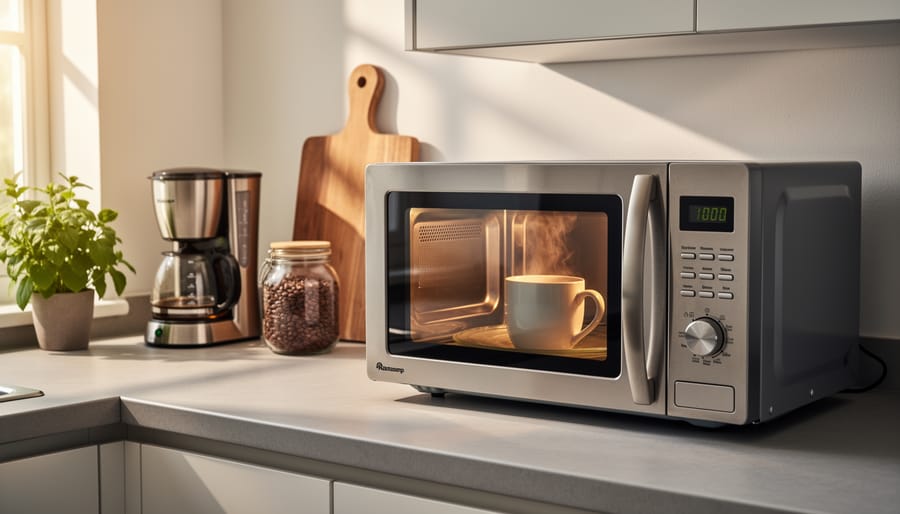
Let’s clear something up: the microwave isn’t the villain here. Coffee changes the moment it’s brewed. As it sits, it keeps reacting with oxygen, and those changes show up as flat, dull, or bitter flavors. Aromas fade, and the bright notes you loved at the first sip go quiet. By the time you reheat that mug, it’s already a different drink.
Heat adds a second problem. Microwaves can warm a cup unevenly, so some pockets run hotter than others. Overheat the liquid and you can push it into harsh, bitter territory. That’s why a cup blasted on full power for a minute often tastes worse than one warmed gently in short bursts. The tool matters less than the method.
Plenty of people enjoy microwaved coffee, and that’s perfectly valid. If you’re racing out the door, working from an office mug, or prepping a cup to pour over ice later, the microwave is a handy shortcut. No purist judgment here. Your coffee, your rules.
The microwave also earns its keep before the coffee even exists. You can heat water for instant coffee, warm milk for a latte-style mug, or loosen up a cold brew concentrate with hot water for a quick cup. Even a fast mug brew starts with hot water from the microwave. Used this way, it’s less about rescuing old coffee and more about making a good cup quickly.
What You’ll Need to Microwave Coffee the Right Way
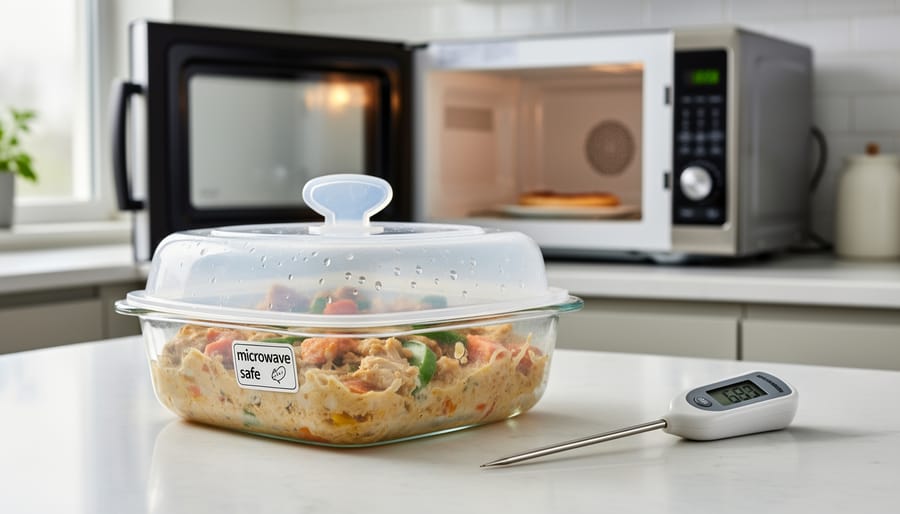
Before you hit start, gather a few simple things. Having them ready makes the whole process smoother and a lot safer.
- A microwave-safe mug or glass, with no metal rim, gold trim, or metallic paint.
- A saucer or microwave-safe cover to catch splatters and hold in heat.
- A wooden stir stick or spoon for stirring before and after heating.
- An optional food thermometer to check that your coffee is hot, not scalding.
- Your coffee, ideally leftovers from the same day.
Ceramic and glass are the safest bets for the mug. They heat evenly, don’t react with coffee, and rarely add odd flavors. Check the bottom of your mug for a “microwave safe” label, and skip anything with metallic decoration. Travel mugs with a stainless steel lining are a no-go, so pour your coffee into a proper mug first.
A wooden stir stick is a small but useful helper. Stirring breaks up hot and cool pockets, which is one reason microwaved coffee can taste uneven. A thermometer isn’t required, but it takes the guesswork out if you’re picky about temperature.
As for the coffee itself, fresh leftovers from this morning will taste noticeably better than a cup that’s been sitting overnight. Day-old coffee is still fine to reheat if it’s been stored properly, but expect a slightly flatter flavor.
Safety First: Avoid Superheated Coffee and Other Microwave Mishaps

Microwaving coffee is safe for most people most of the time. The main thing to respect is superheating. Liquid can climb past boiling temperature without bubbling, especially in a smooth, scratch-free mug, and then erupt the moment you bump it, stir it, or drop in a spoon. Short intervals and a little patience prevent nearly all of it.
Here’s how to keep things calm:
– Heat in short bursts. Run 30-second intervals rather than one long blast, and check between rounds.
– Stir before and after. Give the coffee a gentle stir before it goes in and again once it’s out. A wooden stick helps break up any hidden hot pockets.
– Let it rest. Those few seconds on the counter let the temperature settle and any superheated liquid calm down.
– Skip sealed containers. A closed lid traps steam and can pop. Use a saucer or a loose, vented cover instead.
– Keep metal out. No steel travel mugs, no gold-rimmed cups, no foil. Check the bottom of your mug for a microwave-safe label if you’re unsure.
Handle the mug with care when it comes out. Ceramic can get hotter than the coffee feels, so use a dry towel or oven mitt, and keep your face back when you stir or lift it.
Finally, trust your senses before you reheat anything. If the coffee has been sitting out for many hours, has milk in it that’s been left on the counter, or smells sour or off, pour it out. No amount of microwaving fixes that, and a fresh cup is always worth it.
How to Reheat Coffee in the Microwave, Step by Step
The Basic Reheat
Reheating a standard mug of leftover brewed coffee takes about a minute, but the way you do it matters more than the clock. Keep the power low and the bursts short, and you’ll get a hot cup that still tastes like coffee.
- Pour the coffee into a microwave-safe ceramic or glass mug, leaving a little room at the top so it can’t bubble over.
- Set the microwave to 50% power if it lets you. If not, full power works, just with shorter bursts.
- Heat for 20 to 30 seconds, then pull the mug out.
- Give it a gentle stir to even out the temperature and break up any hot spots.
- Repeat in 15 to 20 second bursts until it’s hot but not steaming furiously.
- Let the mug rest for 30 seconds, stir once more, then take a careful first sip.
A single 8 to 10 ounce mug usually lands somewhere between 45 and 75 seconds in total. A bigger travel-sized serving can need closer to two minutes, while a half cup might be done in 30 seconds. Higher wattage models run hotter, so if yours is 1,100 watts or more, trim each burst by a few seconds. Lower wattage machines may need an extra round. Stirring and tasting as you go beats guessing every time.
Microwave Coffee Brewing: Heating Water for Instant and Quick Mug Brews
Heating water in the microwave is a perfectly good shortcut for instant coffee or a quick mug steep. Start with a microwave-safe mug filled with fresh, cold water, leaving an inch or so of room at the top so nothing sloshes over the rim. Heat it in 30-second bursts, checking after each one. Most mugs need roughly one to two minutes, but wattage and volume vary, so trust your eyes more than the clock.
Here’s what to watch for. Microwaves heat unevenly, so you can end up with a scalding top layer and cooler water underneath. Water can also superheat, meaning it gets hotter than boiling without bubbling, then erupts the moment you stir or add coffee. To lower the risk, place a wooden stir stick or spoon in the mug while it heats, and stir gently before you add anything else.
Insider tip: after the microwave stops, let the water rest for 30 to 60 seconds. Water straight from the microwave can be hotter than ideal and may scorch delicate grounds or instant crystals, which can bring out bitterness. A short rest settles the temperature, evens out the hot and cool pockets, and gives you a smoother, better-extracted cup.
Insider Tips for Better-Tasting Microwaved Coffee
Most of the coffee pros I’ve come across agree on one thing: microwaved coffee isn’t doomed, it just needs a gentler hand. The usual advice from baristas boils down to treating leftover coffee like something delicate rather than something to blast.
Here are the tricks that come up again and again:
- Heat one mug at a time, since small batches warm more evenly than a big carafe’s worth.
- Drop the power to about 50% and add time in short bursts instead of one long zap.
- Stir in a splash of fresh coffee to wake up flat, tired flavors.
- Try a tiny pinch of salt, which many coffee fans swear softens bitterness.
- Cover the mug loosely with a saucer so steam doesn’t carry the aroma away.
- Skip the third and fourth reheats, because each round dulls the cup further.
Storage matters just as much as the reheating itself. Pour leftover coffee into a clean, sealed container and refrigerate it soon after brewing rather than leaving it on the counter all day. Cooler, cleaner storage keeps the flavor from drifting any further before you heat it.
Sometimes the best move is not reheating at all. If a cup has been sitting a while and you’re not feeling it hot, chill it over ice and let it become something new. It’s an easy shortcut to a refreshing drink, and if you want inspiration, these iced coffee ideas are a fun place to start.
Want to hear it straight from the pros? Keep an eye out for our expert interviews on Adbeus Coffee Corner, where baristas share their own habits for rescuing a less-than-perfect cup.
Did It Work? How to Check Your Coffee and What to Try Next
Give the cup a quick check before you settle in. Start with temperature: it should be hot enough to steam gently, but not so scorching that you wince at the first sip. Next, smell it. Fresh, roasty aromas are a good sign. A sharp, burnt, or sour smell means the coffee has gone past its best.
Then taste a small sip. Reheated coffee can lean a little flatter or more bitter than a fresh pour, which is normal. If it tastes unpleasantly sour, acrid, or just “off,” pour it out. The same goes for any cup that sat out for many hours or smells stale. It’s not worth the risk or the disappointment.
If the result wasn’t quite right, try a gentler route next time. Reheating on the stovetop over low heat or keeping coffee in an insulated carafe both protect flavor better. Or skip reheating altogether and turn those leftovers into something new. You can make cold brew with fresh grounds, or learn how to do cold brew at home for a smooth, low-effort alternative.
If you find yourself brewing fresh more often, our coffee maker guide can help you pick a machine that keeps every cup tasting great.
Common Questions About Microwaving Coffee
Does microwaving coffee make it unhealthy?
Not in any way that’s been shown. Reheating mostly changes flavor, since the aroma fades and the taste can turn flatter or more bitter. The real health concern is food safety, so toss coffee with milk that’s been sitting out for hours.
Can you microwave coffee with milk or creamer?
Yes, just go gently. Use medium power, heat in short bursts, and stir between each one, because milk can scorch or boil over quickly. If you can, add dairy after reheating instead.
Can you reheat coffee more than once?
You physically can, but the flavor takes a hit each round, so one reheat is the sweet spot. If you often have leftovers, pour what you won’t finish into a jar for iced coffee instead.
How long should you microwave a cup?
For a standard mug, start with 30 to 45 seconds at about 50% power, then stir and check. Wattage and volume vary, so add 15-second bursts until it’s hot but not scorching.
Is it safe to microwave coffee in a travel mug?
Usually not. Many travel mugs are stainless steel or have metal parts, and some are sealed, so pour your coffee into a microwave-safe ceramic or glass mug instead.
Got a question that isn’t covered here? Most of the answers come down to the same few habits: short intervals, gentle power, and a quick stir. Keep those in your back pocket and you’ll rarely go wrong.
So, can you microwave coffee? Absolutely. With short bursts of heat, a gentle power level, and a microwave-safe mug, you can bring a cold cup back to life without sacrificing much flavor. And on those rushed mornings when the kettle feels like too much, heating water in the microwave for an instant or quick mug brew is a perfectly handy shortcut.
Next time you’ve got leftovers sitting on the counter, give these tips a try. Heat in 30-second intervals, stir well, let it rest for a moment, and taste before you decide it needs more. You might be surprised how good it can be.
When you’re ready to go beyond the microwave, Adbeus Coffee Corner is full of brewing guides and recipes waiting for you. However you like your cup, hot, iced, fresh, or reheated, the best coffee is the one you actually enjoy.