
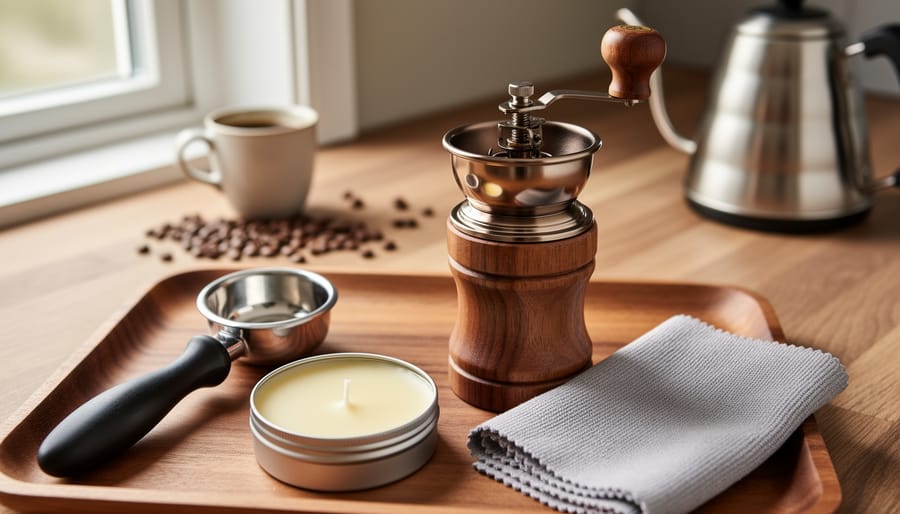
A weekend coffee ritual wax finish transforms the simple act of caring for your brewing equipment into a meditative practice that deepens your connection to coffee culture. The process takes about 30 minutes: you apply a protective wax to wooden elements of your grinder, portafilter handles, or serving trays while brewing your Saturday or Sunday cup, creating a mindful pause that honors both craft and care. The technique borrows from traditional woodworking and equipment maintenance, where regular waxing preserves natural materials and builds a gorgeous patina over time.
Coffee lovers have long understood that great brewing starts with well-maintained tools. But this ritual goes beyond functionality. It’s about carving out deliberate time to slow down, inspect your gear, and appreciate the objects that deliver your daily caffeine fix. As specialty coffee roaster Marcus Chen told us, “When I started waxing my wooden grinder components every Sunday morning, it changed how I approached the entire day. You notice details you’d otherwise miss, imperfections that need addressing, the gradual aging of materials you handle every single day.”
The practice combines two satisfying elements: the sensory pleasure of working with natural waxes and oils, and the pride of maintaining equipment that performs better when properly cared for. Similar to how enthusiasts protect automotive finishes with car wax coffee gear benefits from regular protective treatments that prevent moisture damage and wear.
Why Weekends and Coffee Rituals Go Hand in Hand
There’s a reason your Saturday morning coffee tastes different than Tuesday’s, even if you’re using the same beans. The shift isn’t in the chemistry of the brew, it’s in your state of mind.
During the week, coffee often becomes a functional necessity, something we grab between checking emails and rushing out the door. Weekends offer something fundamentally different: permission to linger. Without the pressure of deadlines and the mental load of the workweek, you can actually experience the process rather than just complete it. This transition from task to experience transforms coffee from fuel into pleasure.
The psychology here runs deeper than simply “having more time.” Research on mindfulness and rituals shows that intentional, repeated practices create mental boundaries that help us shift between different states of being. When you dedicate Saturday morning to a deliberate coffee ritual, you’re signaling to your brain that work mode is over and restorative time has begun. The ritual itself becomes an anchor point for relaxation.
When we engage in mindful rituals, we’re creating small pockets of presence in an otherwise distracted world, and that presence is where genuine pleasure lives.
This is why weekend coffee rituals feel so satisfying. You notice the bloom as water first hits the grounds. You hear the subtle sounds of brewing. You smell the aromatics as they develop. These sensory details exist on Tuesday mornings too, but on weekends, you’re actually present for them.
Creating intentional moments of pleasure isn’t indulgent, it’s essential. These practices remind us that life isn’t meant to be entirely productive and efficient. Sometimes the point is simply to enjoy the thing you’re doing while you’re doing it, which is exactly what makes weekend coffee rituals worth protecting and developing.
The Art of the Perfect Weekend Coffee
Choosing Your Weekend Beans
Weekend mornings deserve beans that make you pause and appreciate. Save the reliable everyday blend for weekday autopilot, this is your chance to explore something that demands attention.
Single-origin coffees shine here. A naturally processed Ethiopian Yirgacheffe or a washed Kenyan AA offers complexity you’ll miss when rushing through a workday cup. These beans tell stories: specific farms, precise elevations, particular processing methods. You’re not just caffeinating; you’re tasting someone’s craft from thousands of miles away.
Micro-lots take this further. These small-batch offerings from exceptional harvests cost more, but you’re brewing a fraction of what a commercial roaster produced. The difference lands in your cup as clarity and depth you won’t find in mass-market bags.
Buy fresh, ideally roasted within the past two weeks. Specialty roasters print roast dates on bags; use them. Some enthusiasts with home roasters roast Friday night for Saturday morning brewing, though that requires planning most of us won’t manage every weekend.
Store opened beans in an airtight container away from light and heat. Contrary to myth, don’t refrigerate or freeze them unless you’re storing sealed bags long-term. Room temperature in a dark cabinet works.
The key: choose beans you wouldn’t risk wasting on a distracted Tuesday morning. Weekend brewing gives you the focus these coffees deserve.
Brewing Methods That Demand Your Time (In the Best Way)
Weekends aren’t the time for microwave coffee or one-button convenience. They’re made for methods that demand your attention and reward it generously.
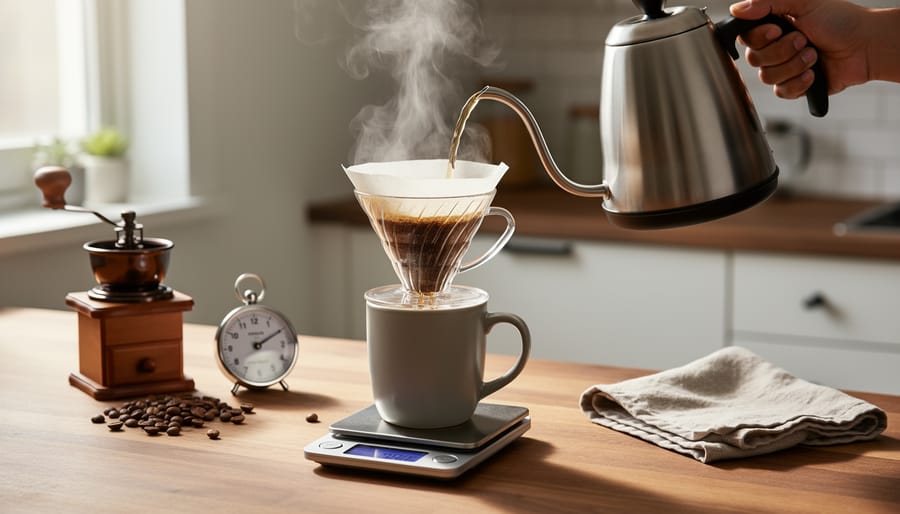
The pour-over stands as the quintessential weekend technique. V60, Chemex, or Kalita Wave, each requires you to control every variable. You bloom the grounds, watch them expand and release gases, then pour in controlled spirals. The entire process takes four to six minutes of focused attention. Your hand steadies the kettle, your eyes track the drawdown, and your mind settles into the rhythm. There’s no multitasking here. The coffee demands you, and you give yourself to it completely.
Siphon brewing elevates this into theatre. The vacuum pot looks like laboratory equipment, and watching it work feels like witnessing alchemy. Water rises through vapor pressure, steeps the coffee, then draws back down through filtration. It’s slow, visual, and utterly captivating. You can’t rush a siphon, and that’s precisely why it belongs in weekend mornings.
French press offers a different kind of meditation, one of patience rather than precision. You add grounds and water, then simply wait. Four minutes of doing nothing but anticipating. No pouring technique, no timing spirals. Just steeping and pressing. The cold brew French press method extends this patience to twelve or twenty-four hours, turning your weekend ritual into something that spans from Saturday morning to Sunday brunch.
Each method forces you to slow down, to be present. The coffee tastes better, yes, but the real reward is those minutes of unhurried focus, something weekdays rarely offer.
The Insider’s Weekend Coffee Workflow
Start with your setup the night before. Measure out your beans, typically 18-22 grams per cup, though your taste rules here, and place them in a small dish near your grinder. Fill your kettle with fresh, filtered water so you’re not waiting groggily at the tap come morning. This small act of preparation shifts the entire experience from scrambling to savoring.
When morning arrives, resist the urge to rush. Grind your beans just before brewing, adjusting coarseness to match your chosen method. For pour-over, aim for a texture like coarse sea salt. The grinding itself becomes part of the ritual, notice the fragrance as the burrs crack open each bean, releasing oils that have been waiting for this moment.
Heat your water to the proper temperature. Most specialty coffees shine between 195-205°F, but if you lack a thermometer, bring water to a full boil, then let it rest for 30-45 seconds. While it cools, wet your filter and warm your brewing vessel. These steps aren’t fussiness, they’re the difference between good coffee and exceptional coffee.
Pour slowly, in concentric circles, maintaining contact with the grounds rather than the filter walls. Watch the bloom rise and settle. Total brew time for most pour-overs should land between 2:30 and 3:30 minutes. If you’re faster or slower, adjust your grind next weekend.
Let the finished coffee rest for a minute before drinking. Add your homemade coffee creamer if that’s your preference, or drink it black to fully appreciate what you’ve created. This first sip isn’t just coffee, it’s the payoff for your patience.
The Proper Wax Finish: Caring for Your Coffee Tools
What Equipment Benefits from Wax Finishing
Not every piece of coffee gear needs special care, but your wooden equipment deserves attention, and wax finishing is exactly what keeps it beautiful and functional. These are the items in your setup that’ll truly benefit from regular waxing, and once you start treating them properly, you’ll notice the difference immediately.
- Hand grinder wooden bodies and handles: The parts you grip daily absorb oils and moisture, so a protective wax layer prevents drying and cracking
- Pour-over stands and brew station frames: Exposed to steam and splashes, wooden stands maintain their finish and resist water damage with proper waxing
- Espresso tamper handles: Constant pressure and hand contact strip natural oils, making wax essential for preserving smoothness and grip
- Knock box frames and wooden trim: Coffee grounds contain acids that can stain or degrade unprotected wood over time
- Serving trays and presentation boards: These showcase pieces stay stunning when waxed, resisting rings from cups and maintaining their rich colour
- Scale platforms and wooden accessories: Even minimal coffee exposure benefits from a protective barrier that’s easy to wipe clean
Your espresso maker itself might have wooden accents or handles that also need this treatment, particularly on prosumer machines with aesthetic wooden components. The key is identifying any wood that touches your hands regularly or sits near brewing areas. These pieces work hard for you, waxing them once a month keeps them working smoothly and looking gorgeous for years.
Choosing the Right Wax for Coffee Equipment
Not all waxes belong near your morning brew. The finish you choose needs to meet a single non-negotiable standard: absolute safety for food contact. Your wooden tamper handle, your walnut pour-over stand, they’re part of your coffee workflow, so skip anything marketed for furniture or general woodworking.
Beeswax stands as the gold standard for most coffee enthusiasts. Pure, food-safe, and slightly tacky when fresh, it creates a protective barrier that repels moisture without feeling slick. You’ll find it sold in blocks, or blended with food-contact mineral oil for easier application. The blend penetrates deeper into wood grain and dries faster than straight beeswax, making it ideal for handles and grinder components you touch daily.
Carnauba wax delivers a harder, more durable finish, think glossy and water-resistant. It’s trickier to apply (requires heat or pre-mixing) but outlasts beeswax on high-wear surfaces. Many woodworkers combine the two: carnauba for durability, beeswax for workability.
Mineral oil blends without wax work too, especially for cutting boards or serving trays. They condition rather than coat, soaking into the wood to prevent cracking. Reapply monthly rather than seasonally.
Whatever you choose, read labels carefully. “Food-safe when cured” isn’t the same as food-grade, your coffee gear doesn’t get weeks to off-gas. Look for explicit food-contact certification, or stick with products designed for cutting boards and kitchen tools. Your weekend ritual deserves that certainty.
The Waxing Process: A Step-by-Step Approach
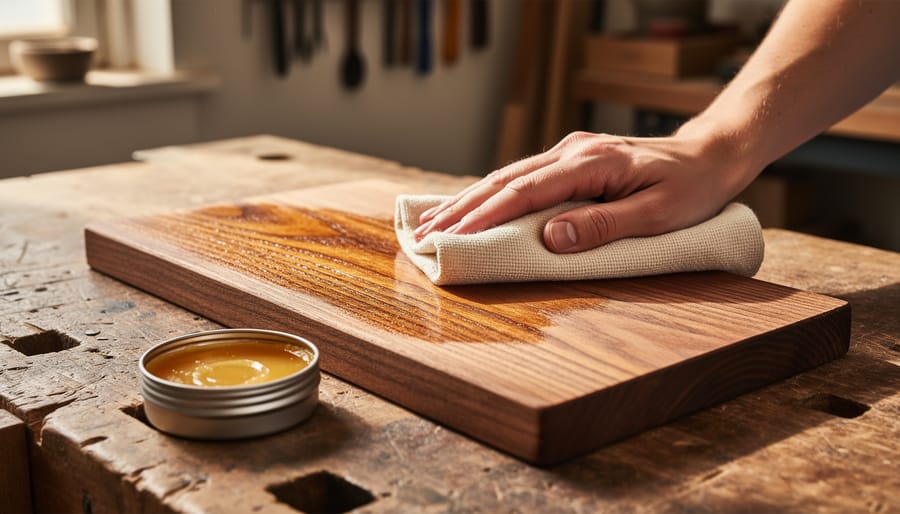
The process of waxing wooden coffee equipment transforms maintenance into something genuinely satisfying. There’s a rhythm to it that pairs perfectly with the weekend mindset, unhurried, tactile, and surprisingly meditative.
Start with clean, dry wood. Wipe down your equipment with a slightly damp cloth to remove coffee oils and dust, then let it air dry completely for at least an hour. Moisture trapped under wax will cause problems later, so patience here pays off.
- Apply a thin layer of wax using a soft, lint-free cloth, working in small circular motions with the grain of the wood
- Let the wax sit for 10-15 minutes until it becomes slightly hazy but hasn’t fully hardened
- Buff the surface with a clean cloth, using firm pressure and long strokes to bring out the shine
- For heavily used pieces like tamper handles, apply a second thin coat after the first has cured for 24 hours
The key is restraint. A fingertip-sized amount of wax covers more surface than you’d think, and thin layers cure better than thick ones. You’ll feel the wood change under your hand as you work, it becomes smoother, warmer, more alive somehow.
Pay attention to joints and crevices where moisture tends to hide. These spots benefit from an extra careful buffing to prevent buildup. The whole process for a typical grinder handle or pour-over stand takes maybe twenty minutes, but it’s twenty minutes where your hands are busy and your mind can wander. Some Saturday mornings, I’ll wax three or four pieces while my first batch of cold brew steeps, the repetitive motion settling into something close to meditation.
Creating Your Personal Weekend Coffee and Wax Ritual

The beauty of this ritual lies in making it truly yours rather than following a rigid formula. Start by choosing a weekend morning when you genuinely have no pressing obligations, trying to squeeze this into a rushed Saturday defeats the entire purpose.
I’ve found that beginning with the waxing process works best. There’s something grounding about starting with your hands engaged in careful, methodical work. Set out your wooden equipment the night before: grinder components, tamper handle, pour-over stand, whatever needs attention. When morning arrives, put on music that matches the pace you want, nothing too energetic. Make your first cup of coffee using equipment that doesn’t need maintenance, something simple like a French press.
Sip that initial cup while you clean and prepare the wooden pieces for waxing. This first coffee warms you up and gets your mind engaged without rushing. The cleaning itself becomes meditative when you’re not racing against the clock.
Apply the wax in unhurried, circular motions, letting the rhythm steady you. As the wax dries, usually fifteen to twenty minutes, prep your special weekend beans. Smell them. Consider the farmers who grew them, the roaster who developed the profile. Grind slowly if you’re using a manual grinder.
While your equipment sits with its fresh wax coat, brew your second, special coffee using the method that demands your attention. Pour-over works perfectly here because the process mirrors the care you just gave your tools: deliberate, focused, rewarding.
Buff the waxed pieces while your coffee cools to drinking temperature. The smooth glide of the cloth over treated wood and the first sip of properly brewed coffee happen within moments of each other, that’s when the ritual clicks into place.
Do this once, and you’ll want to repeat it. Skip a weekend without guilt if life intervenes, but protect this time when you can. The ritual sustains itself because it genuinely feels good, not because you’re forcing discipline.
The beauty of building a weekend coffee ritual lies not in following a perfect formula, but in discovering what brings you genuine satisfaction. Whether you spend fifteen minutes or two hours, whether you wax all your wooden tools or focus on a single favorite piece, what matters is the intention you bring to these moments.
I’ve found that pairing coffee brewing with equipment care creates a natural rhythm. While beans bloom during the bloom phase, I’m buffing wax into a wooden tamper handle. As coffee drips through my pour-over, I’m wiping down my grinder. These aren’t separate tasks competing for attention, they’re complementary practices that share the same mindful approach.
Some weekends, honestly, I skip the waxing entirely and just focus on brewing something exceptional. Other times, I get absorbed in caring for every wooden surface in my coffee corner while barely paying attention to what’s in my cup. Neither approach is wrong. The ritual adapts to where I am that day.
What started as a simple experiment, good coffee and a proper wax finish on Saturday mornings, has taught me something valuable about presence. It’s not about achieving some Instagram-worthy moment of zen. It’s about creating space in your weekend for work that feels satisfying, tactile, and completely your own.
Your version will look different from mine. That’s exactly how it should be.