
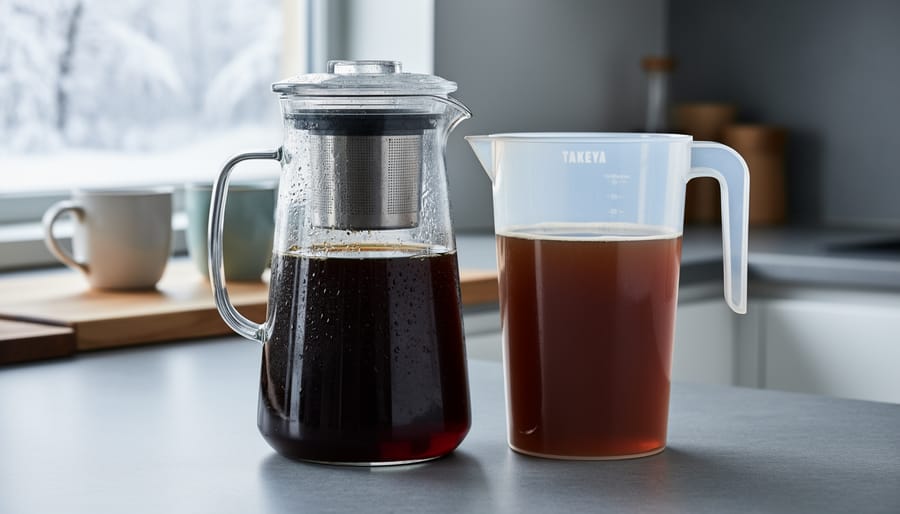
If you’re shopping for a Takeya cold brew coffee maker in Canada, expect to pay between $33 and $91 on depending on the size and material you choose. The 1-quart plastic models hover around $34-49, while the premium 2-quart glass pitcher jumps to roughly $91. These prices reflect import markups and currency conversion, often running 30-50% higher than U.S. retail.
The biggest price drivers are capacity and construction material. Takeya’s standard plastic pitchers in 1-quart (0.9 liter) size represent the entry point, while glass versions and larger 2-quart models command premium pricing. You’ll also notice that Takeya’s own Canadian website frequently shows items as sold out, pushing most Canadian buyers to third-party retailers like Amazon where availability is better but prices reflect marketplace dynamics.
Here’s what makes this relevant for Canadian coffee lovers: the Takeya system promises convenience over traditional DIY mason jar methods, but that convenience carries a price premium. A barista I spoke with in Toronto pointed out that while a mason jar and fine-mesh strainer cost under $15 combined, the Takeya’s airtight seal, built-in filter, and no-mess pouring justify the investment if you brew multiple batches weekly. The question isn’t just whether it works (it does), but whether the streamlined experience is worth two to six times the cost of improvising your own setup.
The real consideration for Canadian buyers is balancing import pricing against the value of a purpose-built system. You’re paying for engineering that eliminates common cold brew headaches like grounds in your finished coffee and oxidation during storage, but you need to brew enough volume to make that premium worthwhile.
Takeya Cold Brew Pricing in Canada: What You’ll Pay
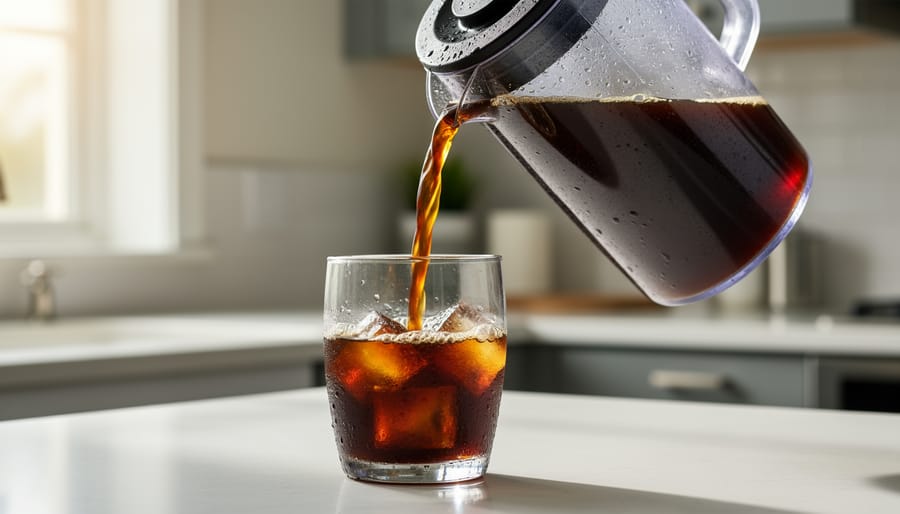
Amazon.ca Pricing (Your Main Canadian Source)
is your go-to retailer for Takeya cold brew makers in Canada as of 2026, especially with Takeya’s official site showing sold-out stock. You’ll find three main models listed, each at different price points depending on size and material.
The most affordable entry point is the Takeya Patented Deluxe Cold Brew Coffee Maker with White Lida 0.9 liter (1 quart) model priced at $33.79. This plastic pitcher sits at the budget end of Takeya’s lineup but delivers the same brewing mechanism as pricier versions. For $15 more, you can grab the Takeya Cold Brew Iced Coffee Maker in Black at $49.13 for the full 1-quart capacity. This model currently shows in stock, making it the most accessible option for Canadians who want to start cold brewing this week.
| Model / Size | Material | Price | Stock Status |
|---|---|---|---|
| Deluxe 0.9L / 1 Quart, White Lid | Plastic | $33.79 CAD | Available |
| 1-Quart, Black | Plastic | $49.13 CAD | In Stock |
| 2-Quart, Black Lid and Handle | Glass | $90.57 CAD | Check listing |
The premium option, the Takeya Glass Cold Brew Coffee Makerjumps to $90.57 for the 2-quart model. That’s nearly triple the Deluxe model’s price, but you’re getting double the capacity and the glass construction that some coffee enthusiasts prefer for taste purity. Stock on this glass variant fluctuates more than the plastic models, so check the listing before committing.
These prices represent what Canadian buyers actually pay in 2026, including any applicable markups and shipping considerations baked into the listed price.
Takeya USA Pricing (For Reference)
If you browse Takeya’s official USA website, you’ll find their base pricing notably lower than what Canadian retailers charge. The standard 1-quart plastic Cold Brew Coffee Maker lists at $24.99 USD on their site, while the 1-quart Glass Cold Brew Coffee Maker carries a $32.99 USD price tag. These figures give you a useful reference point for understanding the premium Canadians pay through third-party retailers.
Here’s the catch: those attractive prices don’t help much if you can’t actually buy the product. As of 2026, Takeya’s website shows their Cold Brew Coffee Maker as sold out. This isn’t just a temporary blip during a holiday rush, the stock situation has persisted long enough that Canadians can’t rely on ordering directly from Takeya USA, even with cross-border shipping factored in.
This sold-out status explains why has become the de facto source for Canadian buyers. You’re paying roughly double the Takeya USA list price when you order through, but you’re getting guaranteed availability and faster shipping. The $24.99 USD base model translates to around $35-50 CAD depending on the specific variant and current exchange rates, before you even consider the retailer markup.
For Canadians serious about getting a Takeya system, the official USA pricing serves mainly as context for evaluating whether the Canadian premium feels justified. You’re not getting ripped off, you’re paying for access to a product that’s otherwise unavailable through direct channels.
Cost Breakdown: What You’re Actually Buying
Beyond the Initial Purchase
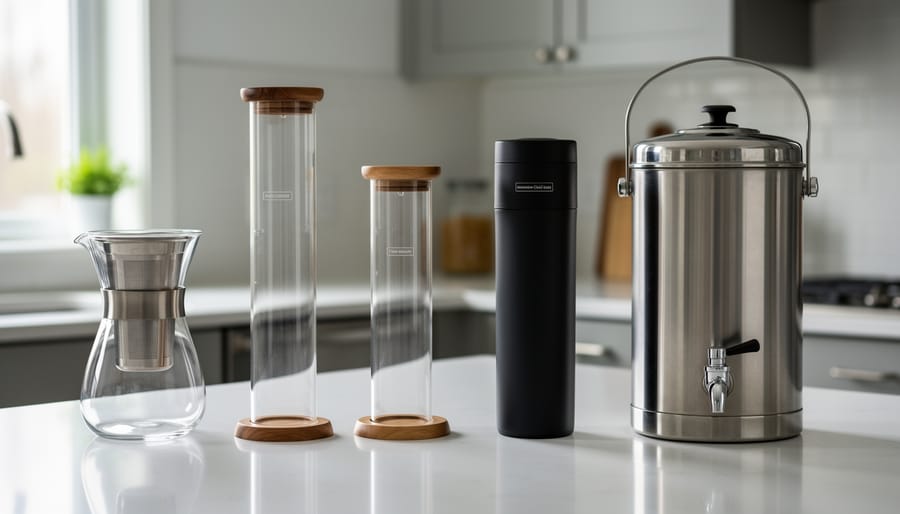
The upfront cost of a Takeya isn’t the full picture. You’ll need to factor in coffee grounds for each batch, and the price can fluctuate depending on your bean choices.
For a standard 1-quart Takeya, you’ll use roughly 1 cup (about 60-70 grams) of coarse-ground coffee per batch. If you’re buying decent specialty beans at $16-20 per pound, each quart of cold brew concentrate costs you around $3.50-5 in grounds alone. That yields 4-5 servings when diluted, bringing your per-cup cost to about $0.70-1.25. Compare that to a café cold brew at $5-7 per serving, and the savings add up fast.
The built-in filter is reusable and doesn’t need regular replacement under normal use. You’ll rinse it after each brew and occasionally give it a deeper clean to prevent oil buildup, but there’s no recurring filter expense like you’d have with paper coffee filters. If the mesh does wear out after a couple of years of heavy use, Takeya doesn’t sell replacement filters separately, which means you’d need to buy a new pitcher. That’s a consideration if you plan to brew daily for years.
Breaking down the math: if you make two quarts of cold brew per week at home, you’ll spend roughly $7-10 weekly on coffee grounds. That same amount of café cold brew would cost you $40-56. Your Takeya pays for itself in about three to five weeks of regular brewing, then it’s pure savings from there.
What Affects Takeya Cold Brew Maker Prices?
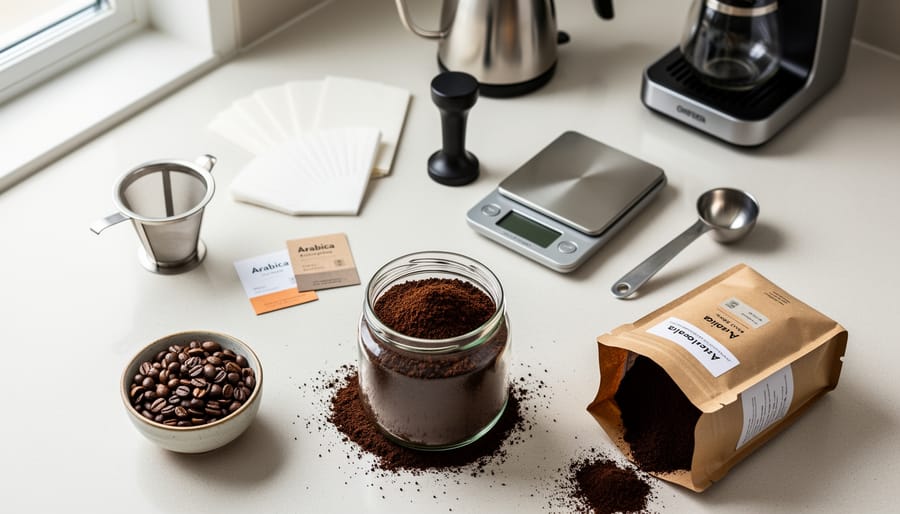
Size and Capacity
Size drives price more than any other factor when you’re shopping for a Takeya cold brew maker. The 1-quart models, whether plastic or glass, sit in that $34-49 range on, making them the entry point for most Canadian buyers. These smaller brewers produce about four servings per batch, enough for one person’s weekly cold brew habit or a couple sharing occasional pitchers.
Step up to the 2-quart capacity, and you’re looking at $90.57 for the glass model available in Canada. That’s nearly double the cost of the 1-quart versions, but you’re getting twice the brewing capacity, around eight servings per batch. The math works if you’re a heavy cold brew drinker or brewing for a household, since you’ll halve the number of batches you need to prep each week.
The premium isn’t just about more plastic or glass. Larger brewers require sturdier construction to handle the weight of two quarts of liquid, plus they include proportionally bigger filters and sealing mechanisms. For solo drinkers or those testing the cold brew waters, the 1-quart size offers better value. Families or serious enthusiasts who’d otherwise brew back-to-back batches should consider whether the 2-quart’s efficiency justifies that $90+ price tag.
Material: Plastic vs. Glass
The jump from plastic to glass Takeya models represents roughly a $30-40 premium in the Canadian market, and it’s not just about looks. The 1-quart glass model runs $90+ on versus $34-49 for plastic equivalents, while even Takeya USA’s pricing shows glass at $32.99 compared to $24.99 for standard plastic.
Glass delivers visual appeal: you see the brew concentrate darkening, which some enthusiasts find satisfying. It won’t absorb odors or stain over time like plastic can, and many prefer the taste neutrality. Glass also feels more permanent, drop-free, it’ll outlast plastic pitchers that eventually cloud or scratch.
The trade-off? Weight and fragility. Glass models are heavier to handle and won’t survive a drop onto tile. If your cold brew routine involves frequent fridge-to-counter moves or a household with kids, plastic’s resilience often justifies the savings. But if you’re brewing weekly as a centrepiece ritual and washing by hand, glass elevates the experience enough that regular users find the extra $30 worthwhile within a few months.
Canadian Import and Retail Markups
The price gap between Takeya’s USA website and Canadian Amazon listings isn’t just currency conversion, it’s a stack of costs that roughly doubles your outlay. When you convert the $24.99 USD base price to CAD, you’re looking at around $35, but charges $49.13 for the same 1-quart black model.
That extra $14 CAD comes from import duties on products manufactured overseas and shipped to Canada, warehouse and logistics costs for ‘s fulfillment network, and the retailer margin Amazon needs to cover its Canadian operations. Since Takeya doesn’t ship directly to Canada or maintain Canadian retail partnerships, third-party sellers and Amazon itself factor in the risk of holding inventory and the limited volume of Canadian sales.
The 2-quart glass model shows an even steeper markup, $90.57 CAD versus $32.99 USD on Takeya’s site, because heavier, fragile glass items cost significantly more to ship across the border and carry higher breakage insurance. You’re essentially paying a convenience premium for guaranteed stock and familiar return policies, which matters when Takeya USA is frequently sold out and won’t send products north anyway.
DIY Cold Brew vs. Buying a Takeya System
The True DIY Route: Mason Jars and Cheesecloth
The absolute cheapest way to make cold brew at home costs almost nothing if you’ve got a mason jar in your cupboard. You’ll need coarse-ground coffee (about $10-15 per pound, yielding 16-20 batches), a quart-sized mason jar (free if you already own one, otherwise $2-4), and cheesecloth or a fine-mesh strainer ($3-5 for reusable cheesecloth). Total startup investment? Around $5-10 if you’re buying the basics, or literally just the cost of coffee grounds if you’re using what you have.
The process is simple but messy. Mix one cup of coarse grounds with four cups of cold water in your jar, stir, cover, and refrigerate for 12-24 hours. Then comes the tedious part: straining through cheesecloth takes patience and multiple passes to catch all the sediment. You’ll likely spill some concentrate, and cleanup means rinsing gritty grounds from fabric. Some coffee enthusiasts prefer cold brew in a French press for easier filtering, though that still requires careful plunging and pouring.
This approach makes perfect sense if you’re testing whether you like cold brew before investing in gear, if you only make it occasionally (once a month or less), or if you genuinely don’t mind the extra five to ten minutes of straining and cleanup per batch. For committed cold brew drinkers brewing weekly, though, that mess factor adds up fast. The Takeya’s built-in filter suddenly feels worth the convenience premium.
When the Takeya Investment Pays Off
Let’s work through the actual numbers to see when your Takeya investment starts saving you money.
If you’re currently buying cold brew from a café at $5 to $7 per serving, and you grab one three times a week, you’re spending $60 to $84 monthly. A Takeya maker at $34 to $49 (for the 1-quart models on ) pays for itself in roughly two weeks of regular use.
Here’s the breakdown: each batch from a 1-quart Takeya yields four 8-ounce servings. If you brew twice weekly, that’s eight servings at a homemade cost of about $1.50 each (factoring in decent coffee grounds). Compare that to café prices, and you’re saving $28 to $44 every week. Even the pricier 2-quart glass model at $90.57 breaks even within a month if you’re a daily cold brew drinker.
The catch? You actually need to use it. A Takeya gathering dust in your cupboard saves nothing. The sweet spot is two to three batches per week during warm months, which keeps your fridge stocked without the brew going stale.
My insider tip: batch your brewing on Sunday and Wednesday nights. Set up the Takeya before bed, strain it in the morning, and you’ve got fresh cold brew ready when you need it. This rhythm turns the system into a genuine café replacement rather than a kitchen gadget you forget about. If you find the routine clicks, you might also consider comparing features with options like the Kitchenaid cold brew maker to see which system best matches your habits.
The math works if the habit sticks.
Making Your First Batch: Cost-Effective Brewing Tips
Once you’ve invested in a Takeya cold brew maker, the key to maximizing value is nailing your brewing technique and making smart choices with your coffee. Your ongoing cost is really just the beans, and with the right approach, you’ll consistently produce cold brew that rivals café quality at a fraction of the price.
The beauty of cold brew is that it’s forgiving. You don’t need expensive single-origin beans because the cold extraction process naturally reduces acidity and bitterness, smoothing out flavors. Medium-roast beans from your local roaster or even supermarket brands in the $12-15 per pound range work beautifully. Save the $20+ specialty beans for hot pour-over where their subtle notes shine through.
Here’s your step-by-step process for cost-effective batches:
- Choose affordable quality beans: Look for medium-roast whole beans around $12-15 per pound. Freshness matters more than origin for cold brew.
- Get the grind right: Use coarse grounds, similar to French press consistency. Too fine and you’ll get muddy, over-extracted brew that wastes coffee. Grind fresh just before brewing.
- Nail your ratio: Use one cup of coarse grounds per quart of water as your baseline. This 1:4 ratio produces concentrated cold brew you can dilute to taste, effectively doubling your yield.
- Steep for 12-24 hours: Longer isn’t always better. Start with 14 hours in the fridge for smooth results. Over-steeping past 24 hours can introduce bitter notes.
- Store properly: Your finished concentrate stays fresh in the Takeya pitcher for up to two weeks refrigerated. The airtight seal is key here.
- Consider a second extraction: After your first batch, you can reuse the same grounds with fresh water for a lighter, milder brew. It won’t match the first batch’s intensity, but it’s essentially free coffee.
An insider tip: buy beans in bulk when they’re on sale and freeze what you won’t use within two weeks. Frozen whole beans maintain quality for months, and you can grind them straight from the freezer. This strategy alone can cut your per-batch cost by 30-40%, making each quart of concentrate cost roughly $2-3 instead of café prices that run $5-7 for a single serving.
Where to Buy in Canada: Your Best Options
stands as your most reliable source for Takeya cold brew makers in Canada heading into 2026. With the Takeya USA website frequently showing sold-out status, Canadian buyers need to focus on third-party retailers that maintain consistent stock and reasonable shipping times.
Your Primary Buying Channel
carries the full range of Takeya models discussed earlier, from the budget-friendly $33.79 Deluxe 1-Quart to the premium $90.57 Glass 2-Quart. Prime eligibility on most listings means two-day delivery to major urban centers, which beats waiting weeks for cross-border shipments. Check seller ratings carefully. Stick with “Ships from and sold by ” listings to avoid third-party markups and sketchy fulfillment.
Watching for Price Drops
Takeya prices on fluctuate. I’ve seen the standard 1-Quart Black model swing between $42 and $52 over a three-month window. Install a price tracker like CamelCamelCamel or Keepa to get alerts when your preferred model drops. Black Friday and Prime Day historically bring 15-20% discounts, though stock runs thin fast during sales events.
The Cross-Border Question
Should you order from and ship to Canada? The math rarely works. Even with the lower USD base price ($24.99), you’ll face currency conversion, international shipping ($15-25), and potential duties at the border. A $25 USD pitcher can easily hit $50-60 CAD all-in, matching or exceeding ‘s direct pricing. Save yourself the customs headache.
Once you’ve got your Takeya, pair it with homemade coffee creamer recipes to create a complete cold brew experience without the café markup.
DIY vs Hiring a Pro
When it comes to cold brew, there’s no professional to hire, this is purely a DIY decision between methods. You’re choosing whether to invest in a Takeya system or stick with completely manual approaches using items you already own.
The basic DIY route (mason jar and cheesecloth) costs virtually nothing if you have a large jar at home. You’ll spend 5-10 minutes setting up your brew and another 5 minutes straining through cheesecloth, but expect some mess and sediment in your final cup. The Takeya system at $34-90 CAD eliminates the straining hassle with its integrated filter, produces cleaner results, and stores your cold brew in an airtight pitcher that won’t spill in your fridge.
There’s zero quality risk with either approach if you use good coffee and proper ratios, cold brew is forgiving. The real trade-off is convenience versus upfront cost. If you brew once a week, the Takeya pays for itself in saved time and reduced cleanup within a couple months. If you’re experimenting or only make cold brew occasionally, a mason jar works fine.
Either way, you’re making concentrate perfect for coffee pairing ideas or diluting with water and ice. The Takeya just makes the process cleaner and more repeatable, which matters most to regular cold brew drinkers who value consistency.
Frequently Asked Questions
Can I buy directly from Takeya in Canada?
No, Takeya’s official website doesn’t ship directly to Canada, and their products are currently sold out on their U.S. site anyway. is your most reliable purchasing channel in 2026 for getting a Takeya cold brew maker delivered to a Canadian address.
Why is the Takeya cold brew maker cheaper in the US?
The base price difference stems from currency conversion, import duties, and retailer margins. While Takeya USA lists the 1-quart model at $24.99 USD, Canadian buyers pay $33.79 to $49.13 CAD on, essentially a 35-50% markup covering cross-border logistics and retail costs.
Is the 2-quart Glass model worth paying $90 instead of $34 for the 1-quart?
It depends on your consumption habits and household size. If you’re brewing multiple batches weekly for two or more people, the larger capacity justifies the premium. For solo drinkers or occasional cold brew enthusiasts, the 1-quart plastic model delivers the same brewing quality at a fraction of the cost.
How long does a Takeya cold brew maker typically last?
With proper care, the pitcher body lasts for years, many users report 4-5 years of regular use. The fine-mesh filter may need replacing after 12-18 months of heavy use if you notice slower filtration or grounds slipping through, though gentle hand-washing extends its life considerably.
Can I use any coffee grounds in my Takeya cold brew maker?
Yes, but coarse-ground coffee works best and extends filter life by preventing clogging. You can use whatever beans you prefer, medium roasts tend to produce balanced, smooth cold brew, while dark roasts create bolder, more intense flavors. Save the fine espresso grinds for your best super-automatic machines instead.
The beauty of the Takeya system is its flexibility once you’ve made the initial investment. Unlike café cold brew where you’re locked into whatever beans they’re using that week, you control everything from origin to roast level to grind size. That control matters more than most casual drinkers realize, adjusting your coffee-to-water ratio by even a quarter cup changes the final strength dramatically, letting you dial in exactly the concentration you want without paying $6 per serving to experiment.
One question we hear constantly: what about knockoff cold brew pitchers selling for $15-20 on Amazon? They exist, and some work fine for a season or two. The difference shows up in build quality and filter design. Cheaper models often use nylon mesh that deteriorates quickly, letting sediment through after a few dozen batches. Takeya’s stainless steel filter maintains consistent performance across hundreds of brewing cycles, which is why the $34-90 price point holds steady even when budget alternatives flood the market.
If you’re ready to upgrade your homemade coffee routine, expect to invest between $34 and $90 CAD for a Takeya cold brew maker in Canada. remains your most reliable purchasing option in 2026, with the Deluxe 1-quart model at $33.79 offering the best entry point and the 2-quart glass version commanding a premium at $90.57 for those wanting larger batches or glass construction.
Before you buy, run your own numbers. If you’re grabbing café cold brew twice a week at $6 each, that’s roughly $50 monthly. A $34 Takeya pays for itself in three weeks. Drink it daily? You’ll break even in days, not months.
The real value isn’t just financial. A Takeya slots seamlessly into a broader homemade coffee recipe arsenal alongside your French press, pour-over, or espresso setup. It’s low-effort brewing that doesn’t demand technique mastery, just coarse grounds, cold water, and patience. Once you’ve dialed in your preferred coffee-to-water ratio, you’ll have a reliable system that consistently delivers smooth, concentrate-ready cold brew without the mess of DIY cheesecloth methods. Calculate your consumption, choose your size, and start brewing.